
Grandsons cycle 44km for grandma, raising £1,000 to Beat Macular Disease
Posted: Friday 19 December 2025
A grandmother has spoken of her pride after her grandsons, aged just 10 and 12, cycled more than 40km to raise more than £1,000 for macular research on her behalf.
Brothers Ioan and Bryn took it upon themselves to raise money for the Macular Society in support of their grandma Sallie who has dry age-related macular degeneration (AMD), as part of their local Scout group’s cycle challenge.
The pair pushed themselves further than the 40km target for Sallie, pedalling 44km by the end, raising £1,090.
Inspired by his grandma, Bryn, 12, said: “The cycling was fun and challenging. I was thinking about how to raise money, and Ioan liked the idea of us collecting money together, so in the end we decided it should be the Society – it seemed a great choice.
“Our grandma is really nice and kind. She does a lot for charity, so we did something for her this time.”
Ioan, 10, said: “We didn’t think that many people would donate, the first donation was from a stranger, so it means a lot to us.
“Grandma can’t read to us anymore, so I always enjoy reading ‘the night before Christmas on Christmas Eve to her, that’s our tradition.”
Sallie "proud and touched" by her grandsons' fundraising
Sallie added: “The first I heard of it was Bryn saying to me ‘Grandma, I'm doing a 40k bike ride!’ I thought it was a long way to go but they were determined to do it to raise money for the Macular Society, because of my eyes.
"I was very proud and touched, and the boys are so very thoughtful. They raised such an amazing amount of money.”
Sallie was diagnosed with dry AMD in 2000 although it wasn’t until 2015 when she first started to notice changes.
Coping with sight loss
She said: “It has got progressively worse, which I know is quite typical, and I was told it would affect my central vision so if that’s the way it goes, well I’ve always thought I could cope with that.
“I think I have learned to live with this, and I hope to continue that way for some time yet. I remember when I had the letter back from the specialist and it just said I had typical dry macular degeneration, full stop. That was quite stark, it hit home because it was there in writing.”
Sallie, 76, says she can no longer read, she can’t recognise people out and about, but she is grateful for her husband’s support while he can still drive.
"Humour really helps" - keeping a funny side to life
“He’s says he’s worn out his chauffer’s hat!” Sallie joked.
“We're both fairly pragmatic people really, so how I see it is there's no point moaning about this because you only make yourself feel miserable. I do what I can do and I’ve come to terms or am coming to terms with what I can’t do anymore.
“That itself can be difficult because I used to use the computer a lot to make cards for the children and it could be frustrating to do. Frustration is the biggest killer but it’s about trying not to let it surface too much, because it can make everything miserable, so having a sense of humour really helps.”
Keeping up with AMD research and staying informed
As well as humour, Sallie has received advice and support for living with AMD, and she has since become a Macular Society Member.
Sallie said: “I get a lot of information that way and one of the biggest things that you're doing is research. My brothers have got this as well, so research is very important, not just for us but the kids and their kids too.
“I really hope one day there will be something to help treat this condition. I hope it will be able to benefit people in the future, whether that’s a cure or some way of slowing the progress down.
“If people could be spared the loss of independence and the frustration which comes with this condition, which I have experienced, then that’s what I am hopeful for.”
Do your own fundraising


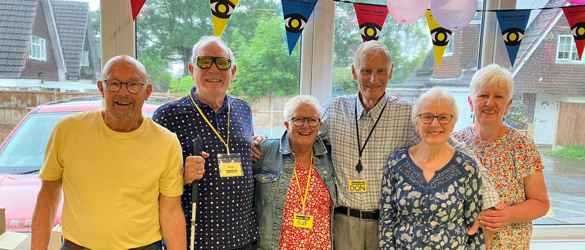
Want to raise money in your community to Beat Macular Disease? Whether you’re looking for ideas or how to get started - we’ve got everything you need.
Get involved in research
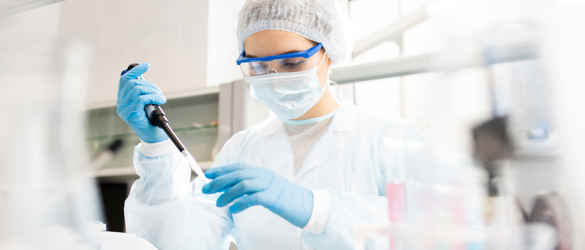
Patients have a very important part to play in medical research. Without them we would not have the treatments we have today and new and improved treatments would not be possible.